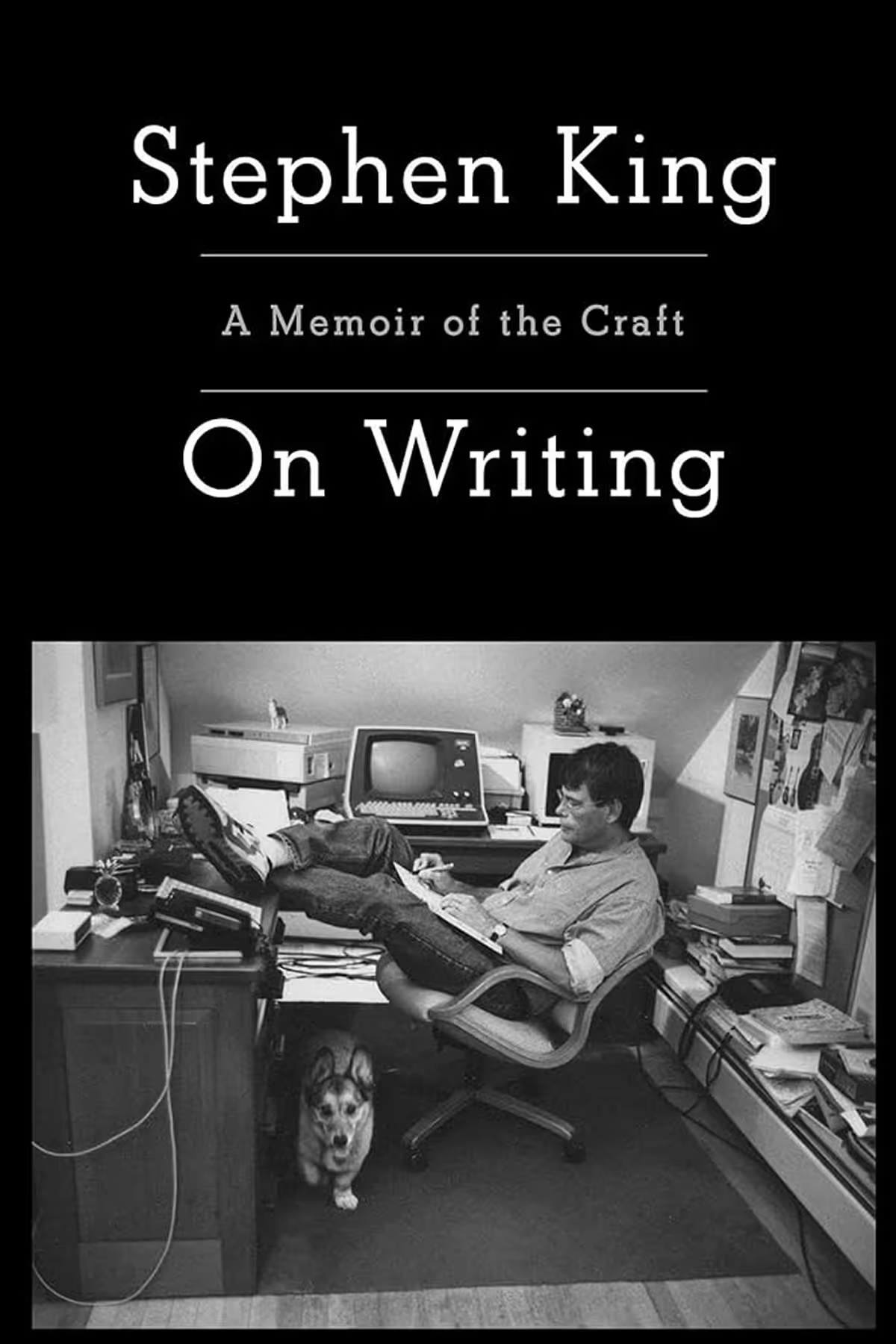
Stephen began sending his first stories for publication when he was 14. He had dozens of rejections and used to pin every rejection onto his wall. At some point, there were so many rejections that the pins fell off. When he turned 16, the generic rejection letters he used to get from publishers turned into handwritten notes. That motivated King to keep on trying.
He hated the draft of his first book, "Carrie" and threw it away. His wife found it in the trash bin and encouraged him to keep going. Later, it became a bestseller.
King's secrets to success:
- Staying physically healthy.
- Staying married.
Most people have some writing and storytelling talent. Practice can strengthen and sharpen anyone’s writing.
While you’re crafting the story, it’s only yours. Don’t ask for feedback and don’t share it with anyone. When the story is ready but needs some editing, then it’s time to let others in.
Vocabulary rule of thumb: Use the first word that comes to your mind if it is appropriate and colorful.
Use simple words. ”One of the really bad things you can do to your writing is to dress up the vocabulary, looking for long words because you’re maybe a little bit ashamed of your short ones.”
Avoid passive voice.
Avoid adverbs. Especially in dialogs.
Every story is built on three elements
Narration: takes the story from A to Z.
Description: helps the reader imagine and sense the story.
Dialogue: brings the characters to life through the things they say.
On adding your personal expertise into your stories/ads
“What you need to remember is that there’s a difference between lecturing about what you know and using it to enrich the story. The latter is good. The former is not.”
- Don't overwrite the details. Let people imagine. That's your benefit over film, that many times it reveals too much.
[If I wanted to read clothes descriptions, I'd buy a ZARA catalog.] - Use metaphors; they're great for making a point. But don't use the obvious ones, like "she was pretty like a summer day" or "he fought like a tiger." These are boring. Find something original.
- Wait as much as you can before you edit. After finishing your first draft, do something else. King comes back to the draft only after six weeks. The book will look familiar somehow, yet not like it's yours. It'll be easier to look at objectively. It's easier to kill someone else's babies than your own.
[In advertising, you usually can’t wait six weeks. Still, even a few hours or a coffee break is better than nothing.] - You can make any text at least 10% shorter. It's easier editing after you’ve let the text cool off for a few hours (or days).
- Ideal reader – everyone writes for one person. It can be a parent, spouse, friend, or anyone else. Imagine that person while writing. Ask: what would be his reaction?
- A storytelling technique: In Medias Res (Latin: into the middle of things). It means going straight into the middle of the plot.
[Like in The Queen's Gambit. And many more.] - You don't always have to work in a sterile environment. Interruptions can actually help and inspire sometimes.
- On writers' workshops – "It is the dab of grit that seeps into an oyster's shell that makes the pearl, not pearl-making seminars with other oysters.”
No amount of seminars or books on writing can replace practicing the craft itself. - There are no shortcuts to becoming a writer. You have to read and write a lot.
Also, the most valuable lessons are the ones you teach yourself. - Sometimes, it's good to read bad prose. It can teach us a lot about writing because it's easier to notice mistakes.
Every good writer kept writing because someone flattered and encouraged them. So let others encourage you.