🗒️
Note: My notes are a mix of key ideas and quotes from the book as well as my own thoughts.
Intro to lateral thinking
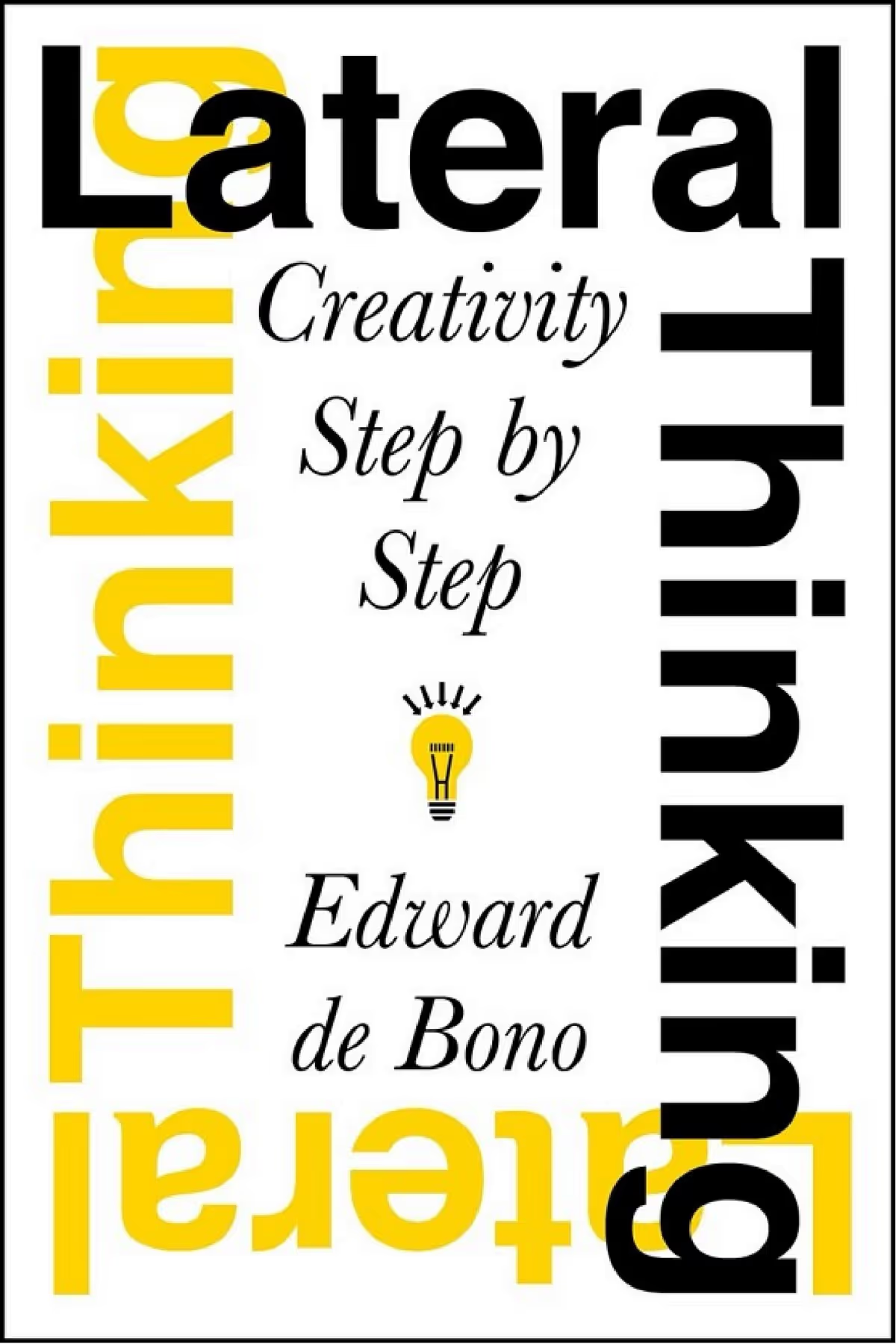
De Bono describes two modes of thinking: Vertical thinking vs. Lateral thinking.
- Vertical thinking refers to a way of analyzing, processing, and using information in a direct, conventional, and logical process. It’s like digging a hole in the most promising place to find the solution and then keep digging as deep as necessary until you find it.
- In lateral thinking, you stay away from the obvious thinking process. Instead, you “dig holes” in random and unexpected places, opening your brain to new input to help it find solutions it wouldn’t consider otherwise. Lateral thinking means thinking outside the box.
There's always more than one way to look at things. If we always keep digging in the same hole, we'll never find new solutions. But if we go out and explore outside of our familiar thinking patterns, we can come up with new ideas.
Anyone can use lateral thinking. Sure, some people are better at it than others. They feel more comfortable playing with random information and finding the way back to their subject while coming up with new ideas along the way. But still, anyone can be creative.
That’s why De Bono created different exercises and techniques that can help us practice and trigger creative thinking:
Lateral thinking techniques
| # | Technique | How to do it |
|---|---|---|
| 1 | Captions | Cut out photos from newspapers or magazines, then write new captions for them. The image serves as the random input, and your brain uses its experience and associations to come up with new ideas. |
| 2 | Reimagine familiar objects | List design concepts that we take for granted, like an umbrella or a cup, and reimagine them. |
| 3 | Challenge dominant ideas | In every field, there are things that seem obvious. List those ideas and ask yourself if you can challenge them. [Example: before iPhone, it was obvious that cell phones had to have key buttons.] |
| 4 | Reversal method | First, write down your problem or main question. Then, change the order of the words in your description. [Example: instead of asking how high-school students can learn from history, ask, “How can history learn more about high school students?”] |
| 5 | Analogical thinking | Connect your subject with a similar situation or problem. Look for ways to solve the analogy, and then come back to your original problem to see if you can apply the solution there. |
| 6 | Fractionation | Break your problem down to its components and try to solve each part separately or rebuild it differently. |
| 7 | Random exposure | Open a book from a random field, read a little bit, and let it inspire new solutions. It’s always better to pick a book from a field different than the one you're working on. |
| 8 | Formal generation | Go to the dictionary or a book, find random words, and try to connect them with your problem. Instead of random words, you can use visual objects and randomly pick them by their color. [Example: pick the nearest blue object and try to connect it with your problem.] |
Two brainstorming tips
- Don’t judge: There are no “wrong” ideas in creative thinking. Don’t discard any ideas immediately, no matter how dumb they may seem. The most obscure ideas can later become the key to your breakthrough.
Also, people feel freer to speak up about their ideas if they know they’re not being judged and criticized. Creativity takes a relaxed and comfortable environment.
[That’s why good ideas often come to us in the shower.] - Quantity matters: Our minds tend to fix on the first couple of ideas that come to us. But real creativity often lies beyond those first insights. So set a number of ideas you want to come up with (e.g., 10) and keep going ‘till you meet your quota.