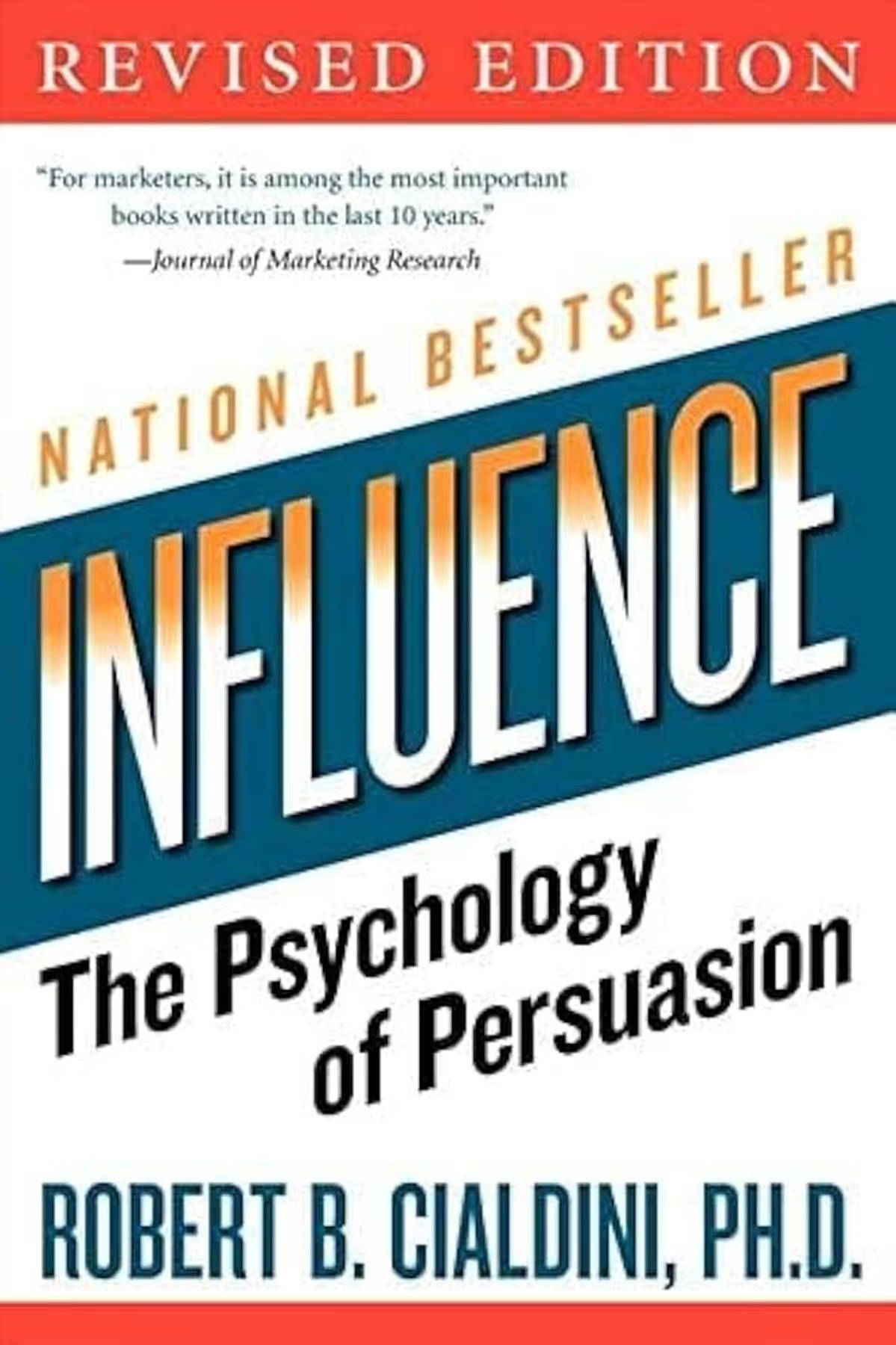
The world is a complex place. We can’t ponder over every single decision, so we have to make some decisions automatically. These automatic decisions are called shortcuts. Most of the time, they work well, but sometimes they cause us to make stupid mistakes. For instance, we’re more likely to agree to do someone: a favor: if given a reason (even if the reason doesn’t make sense).
In a study, a few people were queuing, waiting to use a copy machine. A researcher approached them and asked them if she could skip the line and go first. Only 60% said yes, but when she gave them a reason (“because I’m in a hurry”), 94% agreed.
Does price really indicate quality? That’s another shortcut we are used to. Most of the time, it’s true, but some companies use it to trick us. Cialdini gave the example of souvenir shops that increase the prices of unpopular products to sell them faster.
Pricing tips
The six principles of persuasion
- Reciprocation
- Social proof
- Scarcity
- Liking
- Consistency
- Authority
A breakdown:
Reciprocation Rule (or why giving = taking)
Research showed that in every culture, people are naturally prone to giving back a favor to other people. They do it to equalize their position. That's why when we give away a free mini-course, eBook, or webinar, people feel like they owe us something and will be more likely to buy from us.
Rejection-then-retreat (or why hearing ‘no’ is great)
After refusing, when being asked to do or to buy something large, people will be easier to convince to do or buy something smaller. They will feel obligated to at least buy something. They will compare your new offer to your first (big) one.
Scarcity
When things are scarce, we want them more. A study showed that when shoppers were told of a limited-time sale on meat, they bought 3x more than regular. They bought even more (6x more) when told that the sale was secret. Scarcity is created when people think that there is a limited supply, limited time, or limited information
Consistency
Society values consistent, stable people. So we have a strong desire to stay consistent. Once we commit to something in words or action, we’ll try to stick to it. Sometimes, even if it harms us.
Example: how to win a vote? People really care about looking consistent in front of others. If most people have spoken publicly against you, insist on making the voting private. That way, they won’t have to stay consistent with what they said before. But, if the majority was on your side, keep the voting public; even if there is new evidence against your opinion, they won’t change their mind to stay consistent.
The foot-in-the-door technique
Salespeople would sell something very small (or even ask for a small favor like signing a petition) just to change the way their prospects see themselves. Once they perceive themselves as “customers,” they want to stay consistent and agree to buy more expensive stuff.
Social proof
When in doubt, we look to see what others are doing. That’s why there’s artificial laughter in TV sitcoms. And that’s why product testimonials work so well. We’re so influenced by others’ actions, research shows, that when there’s a story about suicide in the newspaper, many other suicide cases follow right after. It’s called the Werther effect.
Liking
We’re more compliant toward people we like. Here are the kinds of people that we like:
- People who flatter us.
- People who look like or behave like us (e.g., same origin, age, occupation, etc.).
- People who look good (the halo effect; we tend to think that good-looking people are better people in general).
- People whom we see on the same team as us (e.g., if they work towards the same goal or agree with our opinions).
- People whom we associate with positive things or events (or negative, for instance, the weathermen are often associated with negative events, so many people hate them, even if the bad weather wasn’t their fault*)
*It’s called the connection rule, and it’s why it’s important to make sure that your brand and ads don’t appear next to negative events. Otherwise, people will link the two, even if they’re not connected.
Authority
We tend to trust authority. If someone is wearing a uniform that indicates authority, we’ll be more likely to trust them.
Example: In a study by psychologist Stanley Milgram, participants gave “lethal” electric shocks to others just because they were told to do so by a person wearing a white lab coat.
[That’s why ads for toothpaste show “doctors.”]