Habits
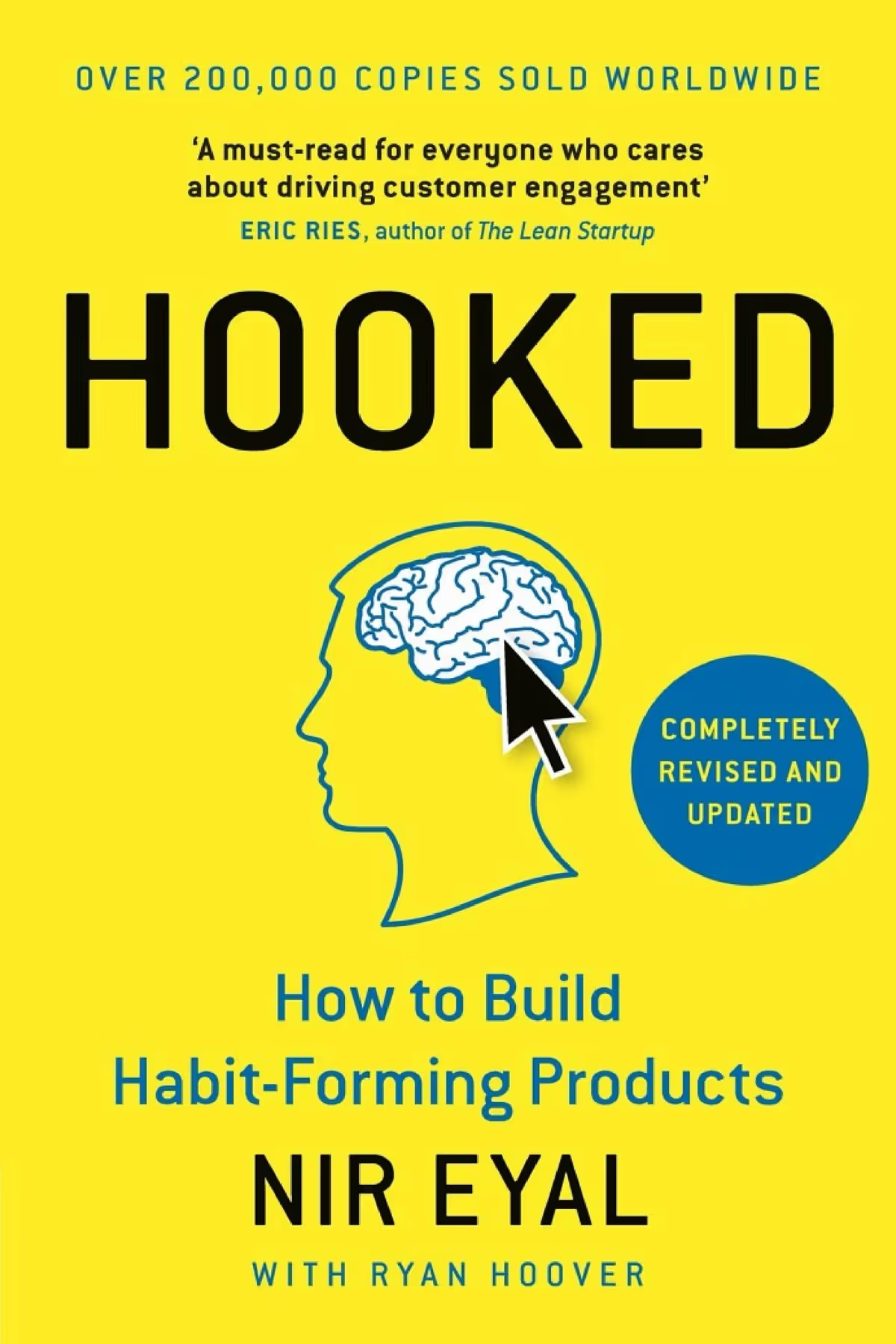
•Our brains automatically repeat different behaviors and sets of decisions to save time and energy. These automatic decisions are habits.
•Once a habit has been formed, it’s hard to change. Even when we lose a habit but return to it, our brain will quickly go back to that familiar routine. That’s why most alcoholics start drinking again within a year after going sober.
•And that’s why some of the most successful products in the world are habit-forming products. Even if there are better products in the market, people are so used to the ones they’re using that they will be very reluctant to try something new.
•The main thing about habit-forming products is that they all answer a basic human need, and they usually help to calm some sort of pain. For example, people often use Instagram when stressed because it’s a place where they feel in control. It gives them certainty in this scary, uncertain world.
The Hook Model
Four steps to form a habit:
| Step | Description |
|---|---|
| Trigger | an external event that encourages people to try an app. notification, email, advert, word-of-mouth |
| Action | what people need to do to start using the app. sign up with their email, fill in their language preferences, etc. |
| Reward | fulfillment of a basic human need. IG = the need for social acceptance |
| Investment | the value people invested in the app, like information, time, or money. who wants to leave Spotify after spending hours creating playlists and saving songs |
Types of triggers
External Triggers
Notification, ads, an invitation from a friend, or anything else that encourages you to try the product.
Internal Triggers
A feeling from within that calls you to use the product again. For example, you get anxious and then open Instagram.
A note on actions
Especially to start, the apps usually ask you for a simple action, like a one-click registration. You'd probably give up if they ask you for too much, like filling out a long form or answering boring questions.
Rewards
The product has to provide you with rewards all the time. The rewards must also be connected to your initial core reason for using the product. Forums discovered that when they tried rewarding users with money for their activity, users really wanted social recognition, not money. That’s why they doubled down on User Karma, XP, and similar features.
Tribe
Social rewards fueled by the affection of other people [Example: Reddit]
Hunt
Search for material resources and information [Example: Google]
Self
Search for mastery, confidence, and completion [Example: Duolingo]
Product investment
Anyone can code a website like Twitter. But what's special about it is the time you've invested in it. It's like with pets. It could be any other dog, but once you train it, feed it, and take care of it, you'd never ever replace it. It’s your dog.
Twitter’s investment is through who you followed and who followed you
LinkedIn’s investment is through creating your CV and adding your recommendations
Example:
- Why do people use Twitter?: They want to stay up to date ← Shallow reason
- Why do they want to stay up to date?: To not fall behind in conversations
- Why?: They want to sound intelligent
- Why?: They want to impress others
- Why?: They want to feel accepted, appreciated, and loved ← Core reason
More stuff
- Ethics: How can companies know if their habit-forming products are ethical? They should ask:
- Does the product enhance the users’ lives?
- Would I (the entrepreneur) use the product?
If both answers are “No,” the product is probably morally wrong.
- Resilience: Most entrepreneurs give up too early. How not to give up? Follow the Rule of 100. Do what you want to do 100 times and then decide.
- If you keep going, by that time, you'll probably succeed.
- Now or then: Painkillers vs Vitamins.
- Painkillers solve an urgent problem. Examples of “painkiller” products are a Gucci shirt or an expert appliance repairperson. You need them now to solve a problem in your life.
- Vitamins are important, but they don’t solve those exciting problems. They solve or prevent a possible problem in the future. For example, life insurance.