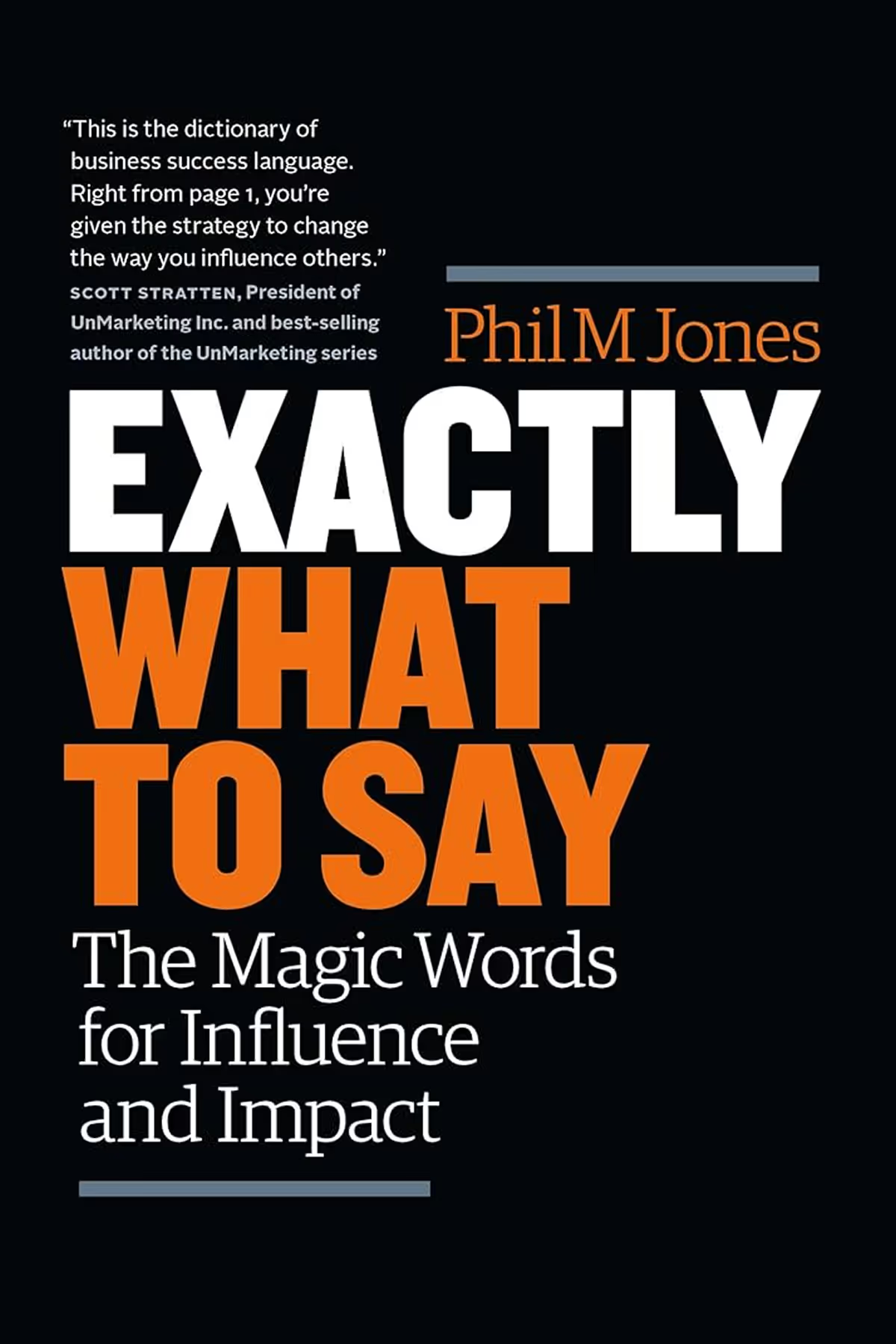
After years in sales and marketing, Jones discovered that you could influence people and change their minds just by using “magic” sentences and words.
Here are my favorite words. I also added some examples that I wrote for copy.ai, just to practice:
I’m Not Sure If It’s For You, But…
It’s a good way to introduce someone to a new idea. The “not sure” part makes it feel more authentic and takes away the pressure as if you’re only suggesting something you’ve heard of instead of trying to sell.
Open-minded
Everyone wants to come across as open-minded.
What Do You Know?
Rather than preaching to someone about your product, ask them what they know about it first. It’ll help you adjust your pitch according to their knowledge and also challenge them, making them the one who sells to you and not the other way around.
How Would You Feel If…?
People want to avoid pain. With this sentence, you can stir up their fear without being too harsh.
Just Imagine...
Jones calls this phrase the "once upon a time of adults" because it puts us in a "story time" mode. You allow the person to time-travel to the good moments your product will create.
When Would Be a Good Time For...?
Asking whether someone wants to try my product leaves me with a chance to receive a 'yes' or 'no.'
You Have Three Options
Narrow down your options while showing the prospect that their alternatives are not so good and they should try your solution.
Example: “So you hate your writer. He’s expensive and delivers bad work. You have three options: One, you can look for another copywriter, go through heaps of LinkedIn profiles, try a few, and maybe find one. Two, you can do absolutely nothing. Or, you can give copy.ai a try, use it alongside what you’re already doing. What option is going to be easier for you?”
There Are Two Types of People
This phrase immediately makes me wonder – which type do I belong to?
⌨️ ”There are two types of people: those who resist change, spend their time hiring expensive copywriters who work slow, and often deliver off-brand copy that doesn’t convert. And those who embrace the change and use AI to write unlimited amounts of compelling copy.”
That's Great!
This phrase helps to deal with objections like "I tried AI copywriting in the past. The copy was complete nonsense!" Instead of answering, “Yeah, but…” I should turn the negative objection into a positive argument.
Most People
Human beings are social beings. Knowing what others have done can often convince us to do the same. Instead of saying: "That's what you should do!" provide social proof and show what most people do.
I Bet You’re a Bit Like Me
Makes you more relatable, revealing your human side.
If… Then
We’re used to this conditioning from childhood.
Don’t Worry
Show the person some compassion and explain why they’ve got nothing to worry about.
Before You Make Your Mind Up
People tend to stay consistent with their choices. Moving someone from a “no” → “yes” is harder than moving from a “maybe” → “yes.”
If I Can, Will You?
Eliminate your prospect’s objections by offering a solution.
Enough
Adding the word “enough” at the end of your offer makes people more likely to agree to it.
Just One More Thing
When your prospect has already agreed to the deal and the atmosphere calms down, you can use the opportunity to add something more into the mix.
What Makes You Say That?
People would often give objections without really understanding them, just because they’ve heard those objections from other people or on TV. When they raise up an objection that doesn’t make sense, ask them: “What makes you say that?” It forces an explanation for their objection. If they can’t…
What Happens Next Is
It calms people down and gives them a clear understanding of what they need to do next. It gives them clarity.
- When people asked the author, “How does it work?” he used to start explaining every single feature and technical detail to them. But then he discovered another method, he just answered: “It works great!”
Conversion rates drastically improved. - By the way, Jones says that, of course, nothing in sales works 100% of the time. That’s why these words should not work with all of the people all of the time, they should work with more of the people more of the time.