Usually, fun ads don’t die because they underperform. They die because the CMO won’t even agree to test them.
So I use this presentation framework to convince executives to run my weird ads:
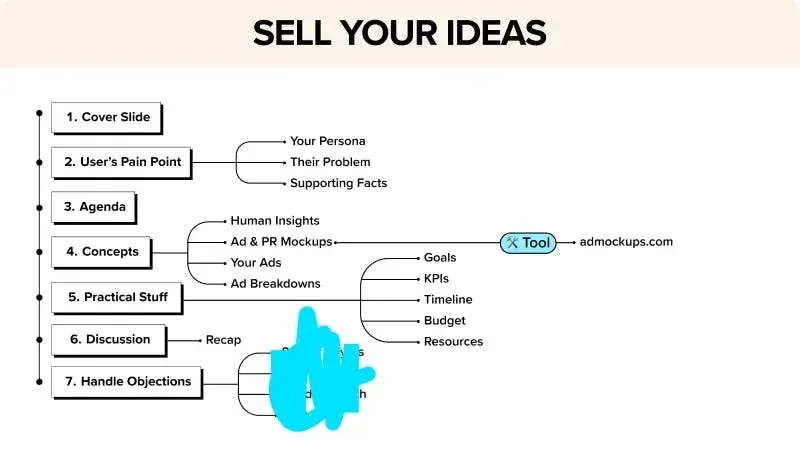
1. Cover (1 slide)
Campaign name, client logo, and date.
2. User’s Pain Point (3 slides)
I like to start with: “You know, it’s just not fair.” Then, I explain what our persona is going through:
- Persona (Name, photo, and basic facts)
- Their Problem (The product should be the solution)
- Supporting Facts (Press articles, Tweets, Reddit comments that prove this pain is real)
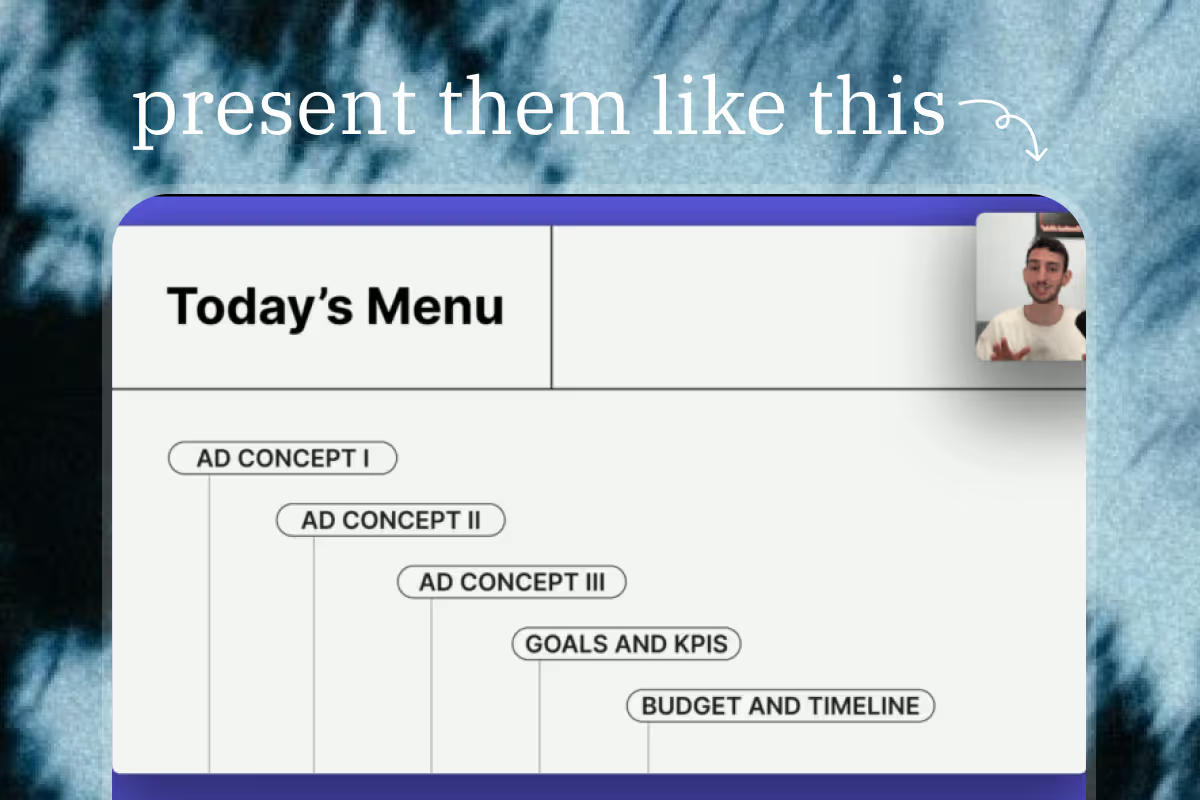
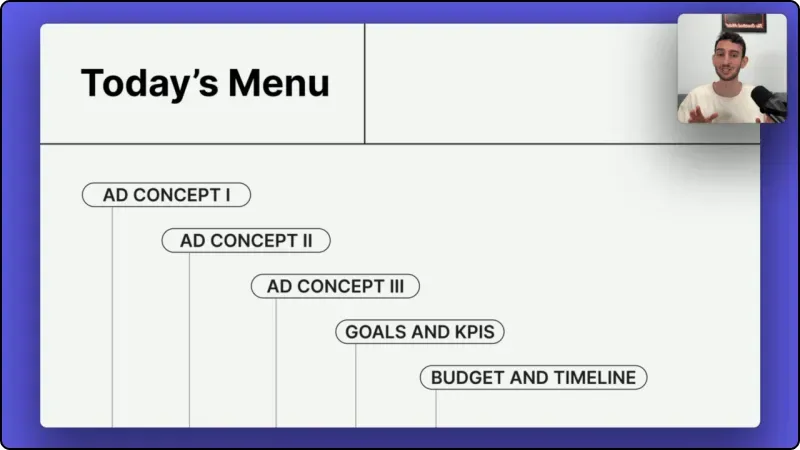
3. Agenda (1 Slide)
I show them what’s on the menu. Usually, it’s:
4. Concepts (4 slides per concept)
For each idea, I present:
- Concept name
- Human Insight: What makes these ads relatable?
- My ads (mocked up → I use admockups.com)
- Ad Breakdown: I explain why I believe this concept is going to work
- Press mockups (Optional)
5. Practical Stuff (3 slides)
Then, I go over:
- Budget & Resources: What we’ll need to make this campaign happen.
- Timeline
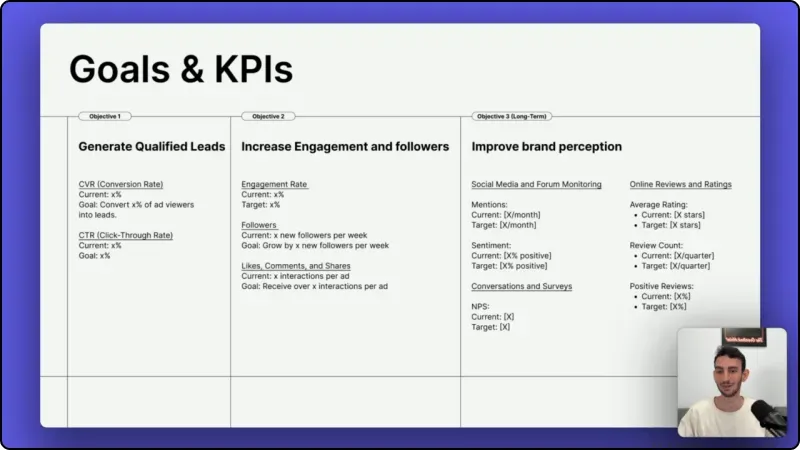
- Goals & KPIs: Long and short-term objectives.
6. Discussion (1 slide)
Next, I recap my ads and take questions. If everything goes well, they’ll pick their favorites, and we’ll move on. But if not…
7. Handle Objections (~5 slides)
In this part, I try to predict their objections and address them.
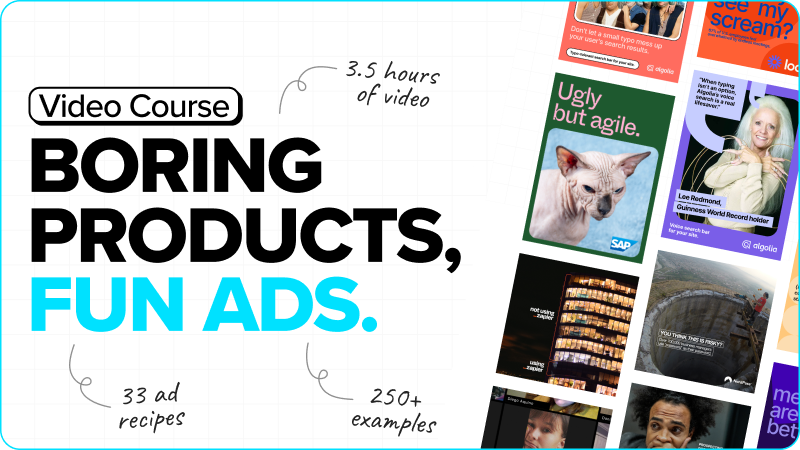
And in my course, Boring Products, Fun Ads, you’ll get:
- My answers to the most common B2B client objections.
- A video where I walk you through my pitching process.
- My pitch deck template (Figma/Google Slides).
And this framework works — ask the tech CEOs who worked with me

"He developed some of the best ads we've ever run on LinkedIn!"

"Shlomo’s creative ads not only grab attention but also deliver results."

"He’s a wizard, a real pro with terrific know-how, superb execution skills and a rare ability to zoom in on what works."